Winwon Chips Winwon Chips

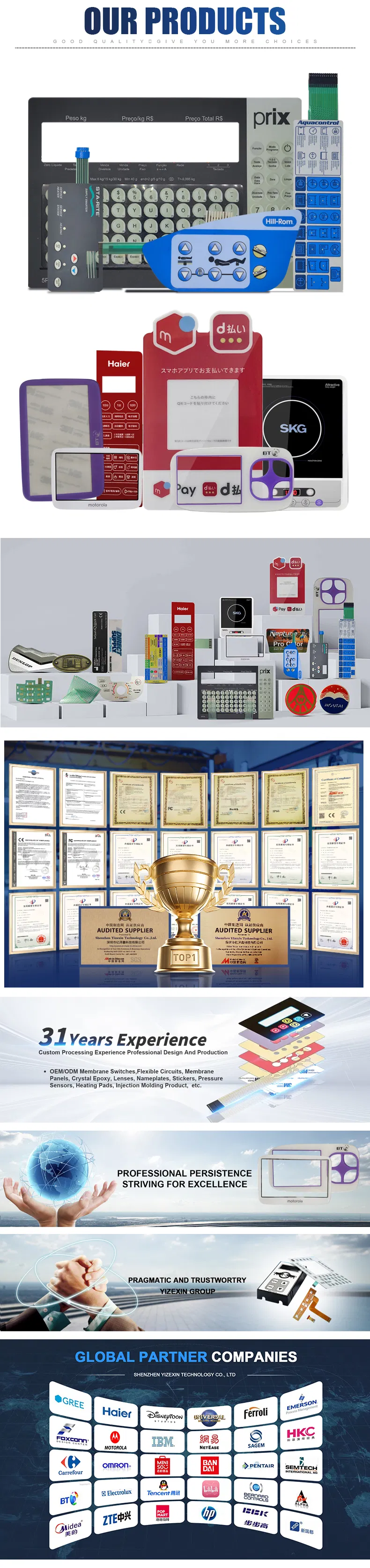
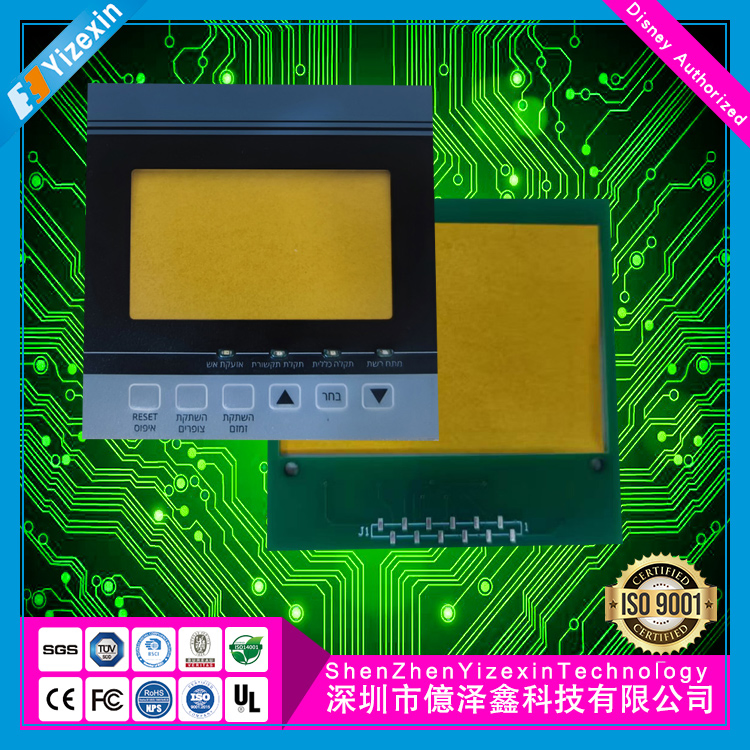
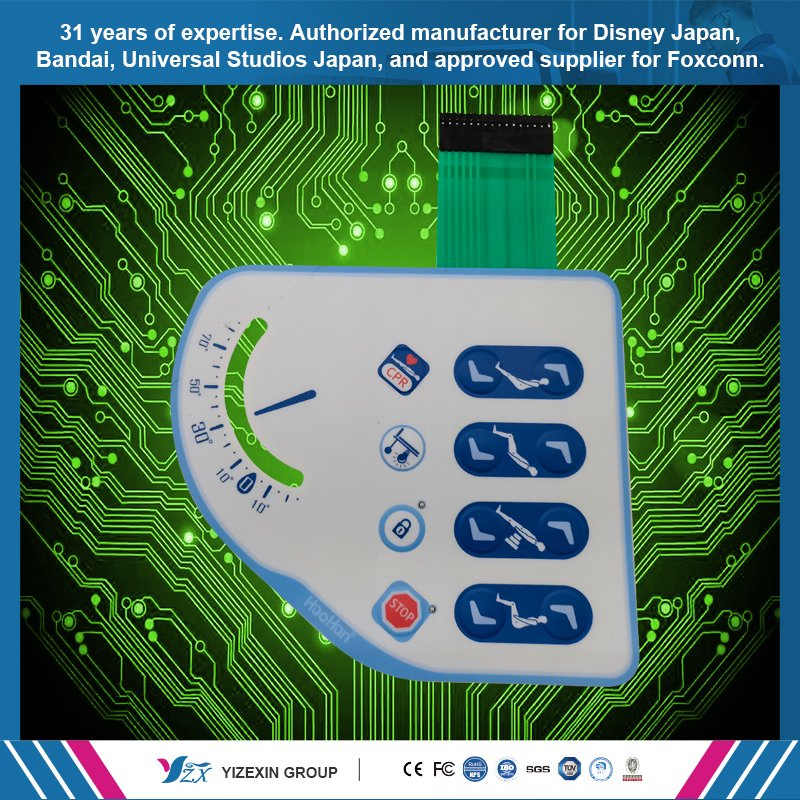
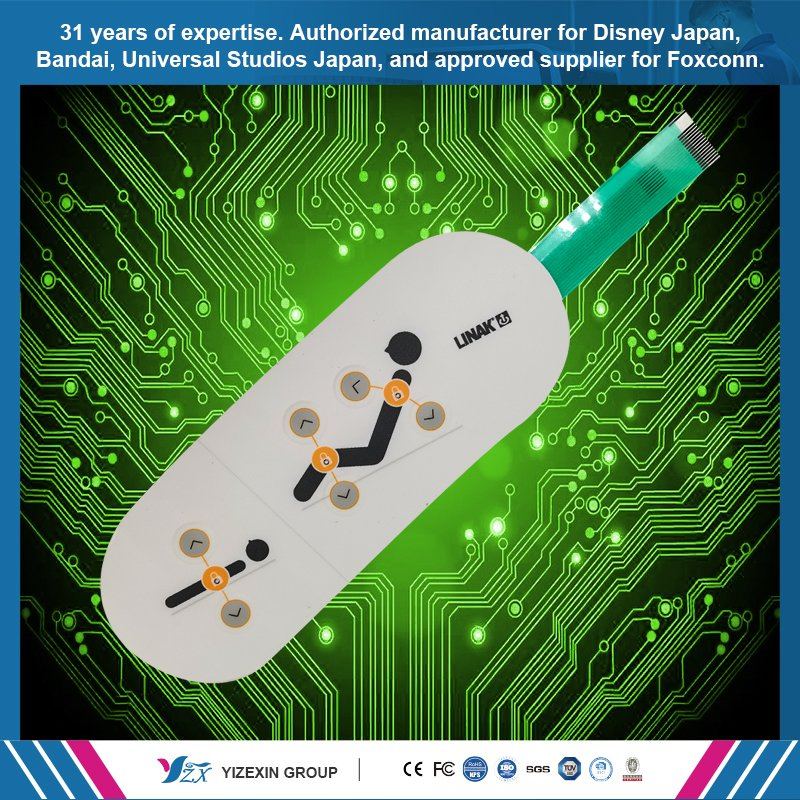
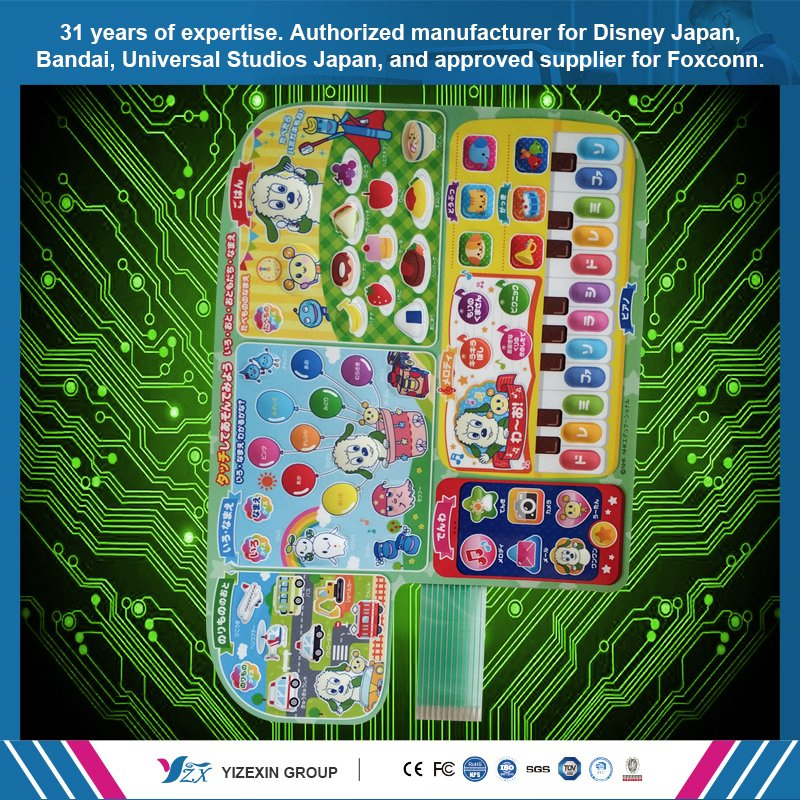
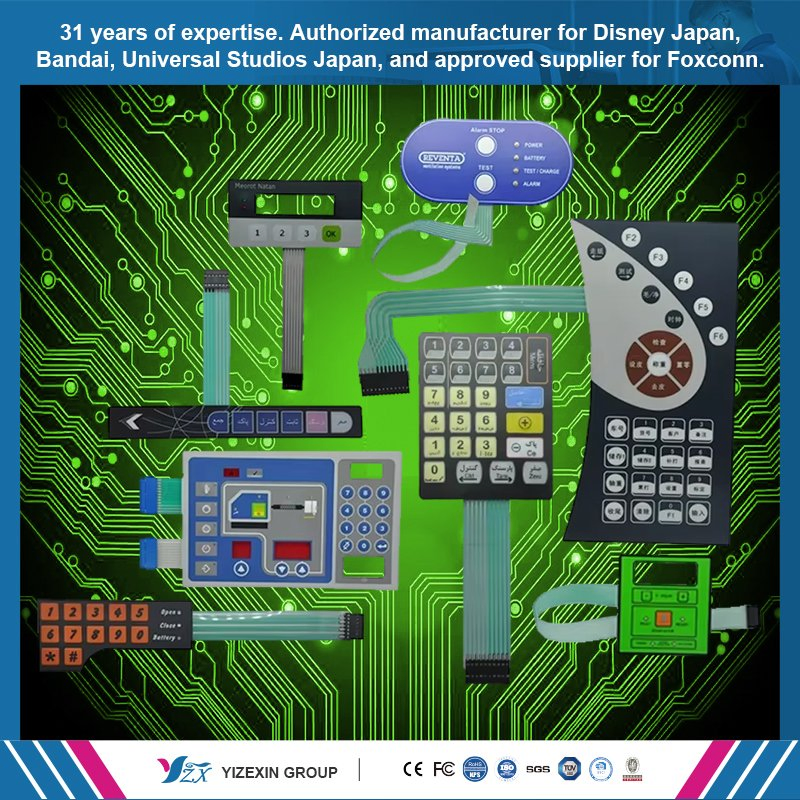
Custom Membrane Switch for Industry / Medical / Home Appliance Metal Dome, Waterproof Dustproof PVC/PC/FPC/ITO Silver & Carbon Paste Printing

Still deciding? Get samples of $ !
Request Sample

Product Description

🚀 Basic Information
Model NO.
YZX-MS033
Material
Pet /PVC/PC/Pii/Flexible Substrate
Usage
Playback Switch, Disconnector, Change-over Switch, Control Switch
Application
Home Appliance, Telecommunication Equipment, Remote Control, Calculator, Camera
Contact Type
Muti-Types/Customized
Number of Switch
Multi Control Switch
Detection Method
Reflection Type
Certification
ISO9001, CE, CCC, OHSAS18001, ISO14001
Working Voltage
50V
Contact Resistance
10MΩ
Life
1,000,000 Times
Actuation Force
20-550g
🛠️ Product Description
Product Type Membrane Switch / Keypad Materials PC, PET, Silicone
Keypad Material Metal / Silicon / Rubber Printing Four color & Silk print
Life Expectancy 5 Million Times Test 100% QC Passed
Adhesive 3M467/468MP/200MP/9080AMP Features Water-proof, Anti-corrosion, Acid proofing, Heat proof
Features & Benefits
It is a sealed entirety made of three or more different materials.
Advantages: small size, lightweight, excellent sealing.
Aesthetically pleasing original design with high durability.
Versatile applications in Electrical, Medical, and Industrial fields.
🔍 What is a Membrane Switch?

A membrane switch is a printed electronic circuit that uses pressure to open and close a circuit. The circuitry is most often screen printed using conductive inks, which are typically made of silver, carbon, and/or graphite. These switches serve as the interface between man and machine, enabling operators to communicate with equipment, instruments, or machinery effectively.

🏗️ How are Membrane Switches Constructed?

Membrane switches are essentially a sandwich of thin layers bonded together using pressure-sensitive adhesives. Depending on application requirements, a switch consists of between 4 to 9 layers. The top layer is the graphic overlay, with printed circuitry underneath. Activation occurs when a printed shorting pad or metal dome makes contact with the bottom circuit layer, closing the circuit.
❓ Frequently Asked Questions
What materials are used in the construction of membrane switches?
Common materials include PC (Polycarbonate), PET (Polyester), and Silicone. The circuitry is typically printed with conductive silver or carbon inks on flexible substrates.
What are the primary advantages of membrane switches over mechanical switches?
They offer a lower cost, occupy less design space due to their low profile, are significantly easier to clean, and provide a sleeker, ergonomic aesthetic.
In what environments can these switches be used?
Due to their enclosed and waterproof features, they can be used in almost any environment, including those requiring resistance to heat, acid, and corrosion.
What is the typical life expectancy of a membrane switch?
Depending on the specific model and materials used, the life expectancy ranges from 1,000,000 to 5,000,000 actuations.
Can the graphic overlay and colors be customized?
Yes, the surface can be customized with various colors (using four-color or silk printing) and finishes such as glossy or matte to suit specific brand requirements.
What industries commonly use membrane switches?
They are widely applied in medical equipment, home appliances, telecommunications, industrial controls, transportation, and digital devices.

Related Products