Winwon Chips
Choosing between OEM and aftermarket electronic parts is not a simple price comparison. It is a risk decision involving fit, traceability, warranty, performance, and future maintenance. For a repair technician, one connector may look identical under bright workshop lights. Its plating, tolerance, or thermal rating may still differ.
The OECD and EUIPO reported that counterfeit goods represented up to 3.3% of global trade, valued at approximately $509 billion in 2016. This figure does not mean every aftermarket component is counterfeit. It does show why supplier verification matters. The U.S. Government Accountability Office also documented counterfeit electronic components entering defense supply chains. These findings support stronger inspection, serial-number checks, and documented sourcing. They do not prove that OEM parts are always better. OEM items can be expensive, unavailable, or unnecessarily specified for low-risk applications.
So, how do buyers answer “How to choose between OEM and aftermarket electronic components”? Start with the application. Use OEM parts when safety, software compatibility, calibration, or warranty protection is critical. Consider reputable aftermarket parts when specifications are transparent and testing is verifiable. iFixit CEO Kyle Wiens captured the user’s perspective clearly: “If you can’t open it, you don’t own it.” That principle supports repairability, but it does not replace engineering judgment.
The uncomfortable truth is simple: labels can mislead. A lower price may become costly after repeated failures, while an OEM premium may add little value. Compare datasheets, failure rates, certifications, lead times, and return policies. Then document the decision. This article examines both options, including the evidence buyers often overlook.
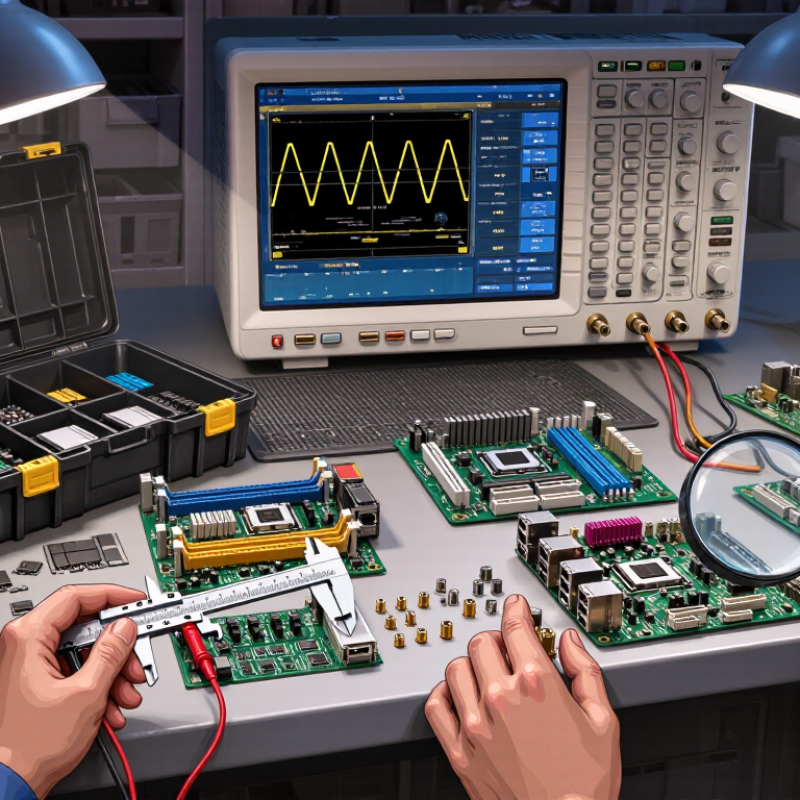
OEM electronic parts are produced to the original equipment manufacturer’s specifications. They usually match the device’s voltage range, connector layout, firmware, and testing requirements. An OEM part may come from the original producer or an approved manufacturing partner. Its traceability is often clearer, especially when serial records and technical documents are available.
Aftermarket electronic parts are made by independent suppliers for replacement or repair. Some equal OEM performance, while others only match the physical shape. Datasheets, tolerance ratings, thermal limits, and warranty terms matter more than the label. The Global E-waste Monitor 2024 reported 62 million tonnes of electronic waste in 2022. Only 22.3% was formally collected and recycled. Reliable replacement parts can support longer equipment use, but poor components may create another repair cycle.
Market scale adds useful context. The World Semiconductor Trade Statistics forecast global semiconductor sales of 611.2 billion dollars in 2024 and 687.4 billion dollars in 2025. That growth improves supply options, but it does not guarantee consistent aftermarket quality. A repair technician should check lot traceability, electrical test results, firmware compatibility, and return policies. Keep records.
OEM pricing can reflect documentation and validation, not flawless performance. Aftermarket pricing can reflect efficiency, or missing controls. That distinction is easy to overlook. A cheaper part may fail under heat, vibration, or continuous load. The practical choice depends on risk, equipment value, downtime costs, and evidence from testing rather than the part name alone.
Choosing electronic parts is not only a price decision. OEM parts are designed around the original device’s circuits, housing, heat limits, and software requirements. Their dimensions usually match the factory layout precisely. Connector pressure, solder quality, and shielding receive controlled attention. In repair work, this consistency reduces fitting surprises. It also makes diagnostic results easier to trust. Still, OEM does not mean flawless.
Aftermarket parts can provide the same basic function without copying every design detail. Some use stronger casings, revised cooling paths, or more accessible components. Others reduce costs through thinner materials or simpler quality checks. Two parts with identical labels may perform differently under vibration, moisture, or repeated heat cycles. Check datasheets, tolerance ranges, test records, and return terms before installation. A low price can become expensive when unstable voltage damages nearby circuits. A small mismatch matters.
For safety-critical or tightly integrated equipment, engineers often favor OEM specifications and documented traceability. For older equipment, a well-tested aftermarket part may be practical when the original design is unavailable.
Inspect pins, seals, and solder joints under magnification. Compare voltage, current, response time, and thermal behavior with the removed part. Fit matters.
I have seen replacements work immediately, then drift after several weeks. That experience makes visual inspection insufficient. The uncomfortable truth is that neither category guarantees quality; supplier controls and application fit matter more than the label.
Choosing between OEM and aftermarket electronic parts is less simple than matching a part number. In repair work, I check connector shape, pin layout, voltage range, and firmware support before installation. An OEM part usually follows the equipment’s original tolerances. That improves compatibility. However, “original” does not guarantee perfect stock or condition. Storage damage can still appear.
Aftermarket parts can perform well when the supplier provides test data, revision details, and traceable production records. I compare measured resistance, signal timing, heat output, and fit under load. A cheap-looking module may pass a quick startup test, then fail after repeated thermal cycles. That failure is expensive. Not always. Small details matter, especially around shielding, grounding, and heat transfer.
Reliability depends on more than origin. I inspect solder quality, seals, and protective components, then run the part through realistic duty cycles. OEM units often reduce integration risk, while quality aftermarket units may offer better availability or updated construction. Yet compatibility claims need evidence, not confident wording. I once accepted a substitute too quickly; it worked on the bench but produced intermittent field errors. A written test record, return policy, and independent inspection make the decision safer. Exact performance still depends on the device, environment, and installation skill.
When replacing an electronic part, cost often shapes the decision, but price alone can mislead. OEM parts usually match the original design, connectors, and performance requirements. Their higher purchase price may reduce installation time and compatibility problems. Aftermarket parts can cost 20 to 50 percent less, depending on the component and supplier. That saving matters. However, quality varies widely between manufacturers.
Warranty terms deserve careful attention. An OEM warranty may cover defects for a defined period, while aftermarket coverage can range from limited protection to several years. Read the fine print. Some warranties exclude labor, incorrect installation, or damage caused by related components. A reliable supplier should provide written conditions, traceable specifications, and responsive technical support. Without those details, a low-cost part becomes a risky experiment.
Availability can change the calculation. Aftermarket components are often easier to find for older equipment, especially when original production has ended. OEM parts may require longer ordering times, but they usually offer clearer documentation and verified compatibility. Check voltage, pin layout, firmware requirements, and physical dimensions before purchase. A technician’s inspection can prevent an expensive mismatch. I have seen repairs fail because a replacement looked identical but used a different signal standard. That mistake is easy to make, even with experience.
Choosing electronic parts starts with the equipment, not the label on the package. OEM parts usually match original specifications, connectors, tolerances, and firmware requirements. They can reduce integration risk in safety-sensitive or tightly calibrated systems. However, OEM availability may be limited, and prices can strain a repair budget. Aftermarket parts vary widely. A well-made alternative can perform reliably when its ratings and dimensions match the application. The cheapest option is rarely the safest choice.
Check the datasheet before comparing prices. Confirm voltage, current, temperature range, frequency, package size, and pin layout. Review production dates, storage conditions, and traceability records. For critical equipment, request test reports and inspect samples before placing a large order. In my repair work, a connector that looked identical failed because its plating wore quickly. Small details matter. I should have checked the mechanical drawing earlier. That mistake delayed testing and increased labor costs.
Choose OEM when failure causes major downtime, calibration loss, or difficult troubleshooting. Choose aftermarket when the supplier offers consistent quality, clear specifications, and responsive technical support. Ask whether replacement parts will remain available for future repairs. Independent testing can reveal heat buildup, signal noise, or unstable performance under load. Keep installation records and note changes from the original part. A practical decision balances reliability, lifecycle cost, lead time, and serviceability. Compatible is not enough. Evidence is better.
This practical 0–10 evaluation compares common purchasing factors. OEM parts generally provide stronger compatibility, consistency, and documentation, while aftermarket parts typically offer better price and availability. Choose OEM for critical fit and reliability requirements; choose aftermarket when budget, replacement speed, and acceptable compatibility are priorities.
OEM parts follow the original equipment specifications. They usually match voltage, connectors, firmware, tolerances, and testing requirements. Documentation is often clearer.
Independent suppliers make aftermarket parts for repair or replacement. Some match OEM performance. Others only copy the physical shape.
Not always. Original parts can suffer storage damage, aging, or poor installation. Origin reduces some risks, but it does not guarantee perfection.
Compare pin layout, voltage range, connector shape, dimensions, and firmware support. Check signal timing and heat output under load. Physical similarity is not enough.
A low-cost component may use weaker thermal control or incomplete testing. It might pass startup, then fail after repeated heat cycles. That hurts.
Request datasheets, tolerance ratings, revision details, lot records, test results, and written warranty terms. Keep every record. Missing evidence matters.
OEM parts may cost more but offer clearer documentation and compatibility. Aftermarket parts may be cheaper or easier to find for older equipment. Read exclusions carefully.
Include purchase price, installation time, downtime, testing, and possible repeat repairs. A part costing 20 to 50 percent less may not save money after failure.
Yes, suitable parts can extend equipment life and reduce unnecessary disposal. Poor replacements may create another repair cycle. The environmental benefit depends on quality.
OEM electronic parts are produced to the original equipment manufacturer’s specifications, while aftermarket parts are made by independent suppliers and may offer different designs, materials, or features. OEM components often provide predictable quality, precise compatibility, and consistent performance, whereas aftermarket options can vary widely but may deliver strong value and broader availability. The best choice depends on the application, required reliability, installation conditions, and the importance of matching the original system exactly.
When considering cost, compare not only the purchase price but also warranty coverage, expected service life, testing standards, and replacement availability. OEM parts may cost more but can reduce compatibility risks, while reputable aftermarket parts may be practical for budget-conscious repairs or less critical applications. How to choose between OEM and aftermarket electronic components depends on balancing quality, performance, compatibility, reliability, support, and total ownership cost. Careful product evaluation and clear technical requirements can help ensure the selected part meets both immediate and long-term needs.
