 Winwon Chips
Winwon Chips
Winwon Chips
In today's global market, the risk of counterfeit electronic components is ever-present. With supply chains extended across multiple countries, buyers must navigate these complexities carefully. John Smith, an expert in electronic supply chain security, once stated, "Vigilance is essential when sourcing components internationally." This rings especially true when considering how to avoid counterfeit electronic components in cross-border purchasing.
The challenge lies in the vast array of suppliers and the varying standards of quality assurance. Buyers often rely on established suppliers, but even reputable firms can be unknowingly connected to counterfeit parts. This uncertainty demands a proactive approach to due diligence. Tools such as supplier audits and robust verification processes should become fundamental practices.
Engaging with professionals familiar with industry standards is crucial. Those involved must regularly update their knowledge about counterfeiting trends. The pursuit of reliability is continuous. Shortcomings can arise from complacency and lack of awareness. Thus, aspiring to ensure safe purchasing practices requires consistent reflection and adaptation to the evolving landscape of counterfeit threats.
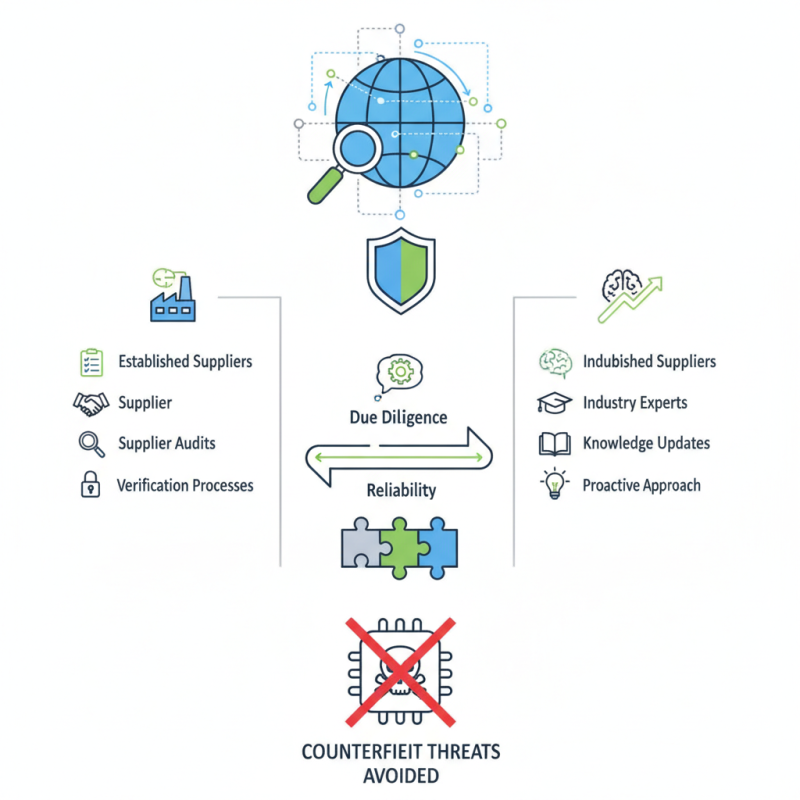
Counterfeit electronic components pose significant risks in the global supply chain. According to a 2022 report by the Electronics Industry Citizenship Coalition, nearly 10% of electronic components in circulation are counterfeit. This alarming figure highlights the challenge manufacturers face when sourcing parts internationally. The consequences can be severe, including product malfunctions, safety hazards, and legal ramifications.
Understanding these risks is essential for procurement professionals. Counterfeit parts can lead to financial losses upwards of $100 billion annually, as reported by the National Defense Industrial Association. Additionally, companies may suffer damage to their reputations, resulting from unreliable products hitting the market. Even with advancements in verification technologies, counterfeiters continuously adapt, making it crucial for buyers to stay vigilant.
Sourcing components without an effective strategy leaves room for error. Conducting thorough supplier assessments is vital. This includes verifying certifications, requesting material traceability, and utilizing reliable testing methods. Companies should be cautious and not rely solely on price as a determining factor. Engaging with specialized third-party inspectors can help mitigate these risks. Attention to detail in the procurement process and understanding the broader landscape are essential to combating counterfeits.
: It helps prevent financial losses caused by counterfeit components. Most counterfeits come from unauthorized suppliers.
Companies should conduct background checks, audits, and performance reviews. Regular assessments are key to managing supplier quality.
About 60% of electronics companies report problems with supplier quality. This emphasizes the need for careful management.
Strong communication helps identify risks early. Regular updates are essential for maintaining supplier relationships.
They provide unbiased assessments of suppliers. Many companies overlook this, leading to significant financial drawbacks.
Blockchain and machine learning improve tracking and detection of counterfeit components. They provide a robust verification framework.
It creates a transparent ledger that tracks components. This ensures each part can be traced back to its origin.
Machine learning can improve detection accuracy by about 30%. It's crucial for adapting to evolving counterfeiting tactics.
Counterfeiting methods change over time. Continuous improvement ensures trust in the electronic components market.
Some companies neglect thorough verification steps. This often leads to costly repercussions down the line.
In today's global marketplace, knowing how to avoid counterfeit electronic components in cross-border purchasing is crucial for maintaining product integrity and safety. Understanding the risks associated with counterfeit components is the first step; these components can lead to significant financial losses and project delays. To mitigate these risks, buyers should familiarize themselves with key features that distinguish genuine parts from fakes, such as packaging, markings, and traceability.
Implementing effective supplier verification practices is vital, including conducting thorough background checks and audits. Leveraging technology, such as blockchain or anti-counterfeit labeling systems, can further enhance authenticity verification. Finally, establishing a robust supply chain management system ensures transparent and reliable sourcing processes. By following these strategies, buyers can significantly reduce the likelihood of encountering counterfeit components when purchasing electronics globally.
